
Quality systems
Requirement / control / evidence / release
Quality systems for repeatable molding
Infinity connects program requirements, verified material, scientific molding, inspection, traceability, and continual improvement in one disciplined production system.
- 4
- Certified operating standards
- Every lot
- Incoming resin identity checked with FTIR
- 30 presses
- All-electric production platform supports repeatable control
Quality planning architecture
Quality planning connects requirements, risks, controls, and release evidence
Each program begins with the conditions that define success. The quality plan then connects those requirements to the material, process, inspection method, and release record that will protect them.
plan
Translate the application into measurable production requirements
Part geometry, material performance, appearance, assembly, and end-use conditions become the criteria that guide tooling, molding, and inspection decisions.
- Critical part characteristics
- Material and application needs
- Acceptance and release criteria
Identify where material, geometry, tooling, and process can affect performance
Program risks are reviewed upstream so prevention can be designed into the tool, the molding method, and the inspection strategy before production scales.
- Design and manufacturability review
- Material and process sensitivity
- Prevention-focused response planning
Build controls around the inputs that determine repeatable molded-part quality
Approved resin, tool condition, machine response, processing limits, and inspection methods are connected to a documented production approach.
- Incoming material verification
- Scientific process development
- Defined monitoring and response
Connect inspection records and traceability to a clear release decision
Dimensional results, visual checks, material identity, and production context provide evidence that the approved requirement has been met.
- On-site measurement results
- Traceable production records
- Documented acceptance evidence
Certified operating framework
Four certified systems reinforce one operating culture
Infinity’s certifications support the distinct expectations of medical, automotive, industrial, and environmentally responsible manufacturing while reinforcing traceability, defect prevention, and continual improvement.
Explore certifications ↘Incoming material assurance
Incoming resin verification protects molding quality
Infinity uses FTIR scanning on every incoming resin lot, creating an early quality gate between the approved material requirement and the production floor.

FTIR scanning helps confirm that incoming material aligns with the specified resin before it is released to molding.
- Define
- Approved resin requirement
- Verify
- Incoming material identity
- Connect
- Lot to production record
Scientific process control
Scientific molding turns process knowledge into a repeatable operating window
The tool, machine, resin, and molded part are treated as one connected system. Documented validation turns that learning into a production method the team can monitor and repeat.
Explore scientific molding + validation ↘Tool behavior
Geometry, venting, cooling, and tool condition shape the available process.
Machine response
Equipment capability and repeatable machine response support a controlled cycle.
Resin behavior
Material identity and processing behavior are connected to the approved application.
Part response
Critical molded-part results confirm whether the process meets the requirement.
Known inputs, repeatable settings, measured outputs, and a clear response path.
Inspection + release
On-site inspection shortens the path from measurement to corrective action
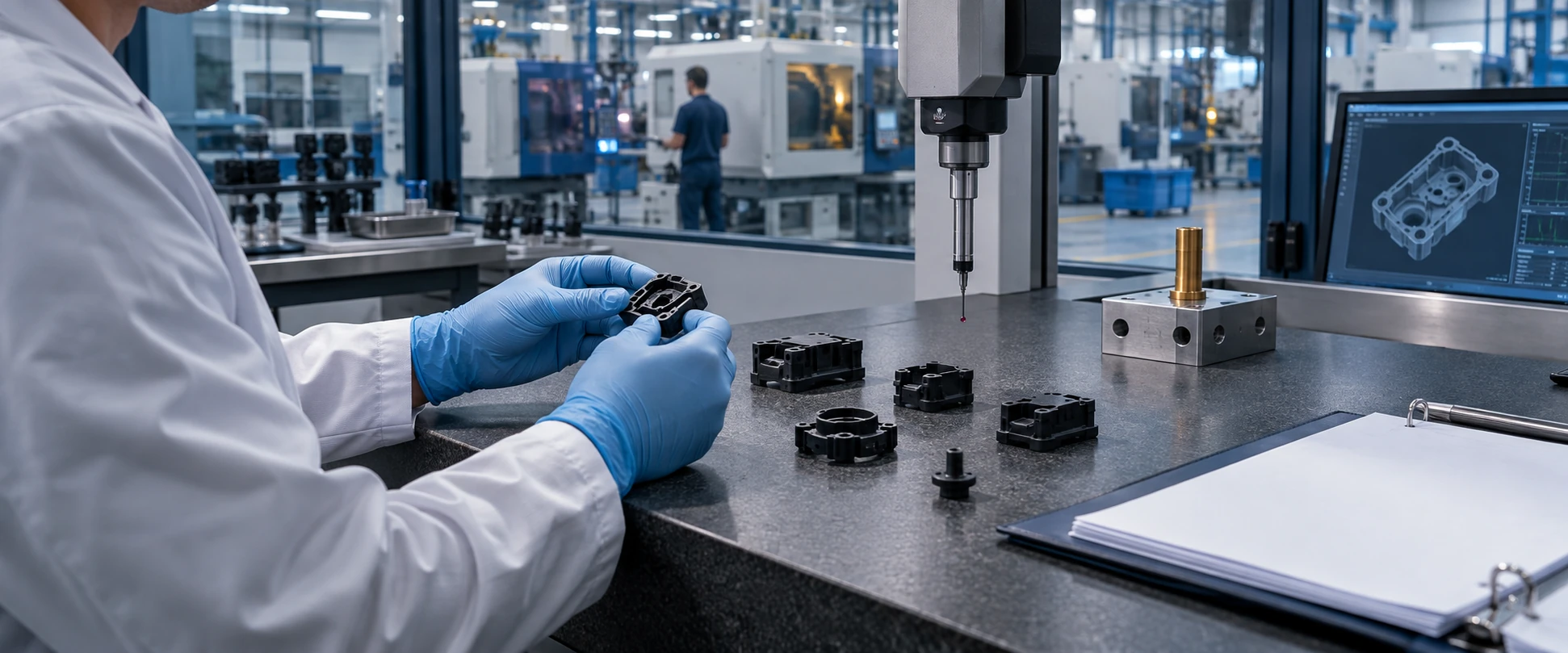
CMM, optical inspection, and production-integrated checks stay close to engineering, tooling, and molding—so evidence can inform the people responsible for the process.
Engineering, tooling, molding, metrology, and assembly share one manufacturing campus.
Explore on-site metrologyCMM inspection
Dimensional data supports verification of critical part features and production decisions.
Vision inspection
Non-contact inspection supports detailed feature and appearance evaluation.
Integrated checks
Electronic and in-process inspection can be placed where the part and program require it.
CMM, optical, and integrated checks stay close to production.
Traceability + improvement
Traceability carries quality evidence from incoming resin through customer release
A connected production record creates context for release, investigation, corrective action, and continual improvement across the life of the program.
- 01Incoming
Material lot
Confirm material identity and connect the lot to the program.
- 02Production
Process record
Carry the approved molding method into repeatable operation.
- 03Verification
Inspection result
Measure the characteristics tied to fit, function, and acceptance.
- 04Decision
Product release
Connect acceptance evidence to the released production lot.
- 05Learning
Improvement loop
Use evidence to strengthen prevention and future production decisions.
Start a quality planning review
Bring Infinity the requirements that define a successful molding program
Start with the drawing, application, existing challenge, or quality requirement. Infinity can help connect it to a practical manufacturing and evidence plan.
Start a program review Explore environmental responsibility ↘